Night photography at base ISO for beautiful images
Not all night photos can be taken at base ISO, because of subject movements and extreme low light conditions (i.e., Milky Way images); however, in some landscape scenes and architectural photos, shooting at base ISO under specific conditions can make beautiful images.
This blog describes an approach for night photography (i.e., photography in low-light conditions) in which images are captured at the camera's base ISO (typically ISO 100) for clean and relatively noise-free night photos. Shooting at a low ISO also helps preserve rich colors while creating a distinctive mood of calmness and serenity. The approach is straightforward: mount your camera on a tripod, select the desired aperture (generally between wide open and the sharpest aperture of your lens), and then choose a shutter speed that properly exposes the scene.
Because night scenes are relatively dark, it is often beneficial to underexpose slightly—typically by 1 to 2 stops—to preserve as much highlight details as possible. In such cases, the peak of the histogram will generally be positioned toward the left side. The goal is to avoid clipping or blowing out bright highlights, particularly those produced by streetlights and other artificial light sources. Depending on the scene, shutter speeds will typically range from 2 to 10 seconds, although longer exposures may be required in some situations. The relatively long exposures are the key factor in capturing low noise images.
Low-ISO night photography may also require calm weather conditions. For example, in the Caissie Cape Wharf images shown below, minimizing the movement of fishing boats was important to maintain image sharpness. In other scenes, however, movement can enhance the final result. This was the case for the image overlooking Shediac, where the long exposure introduced a pleasing motion blur to the water.
Low-ISO night photography is particularly well suited to photographing architectural subjects and illuminated buildings. The best results are often achieved during the blue hour, shortly after sunset, when the balance between ambient light and artificial lighting is at its most visually appealing.
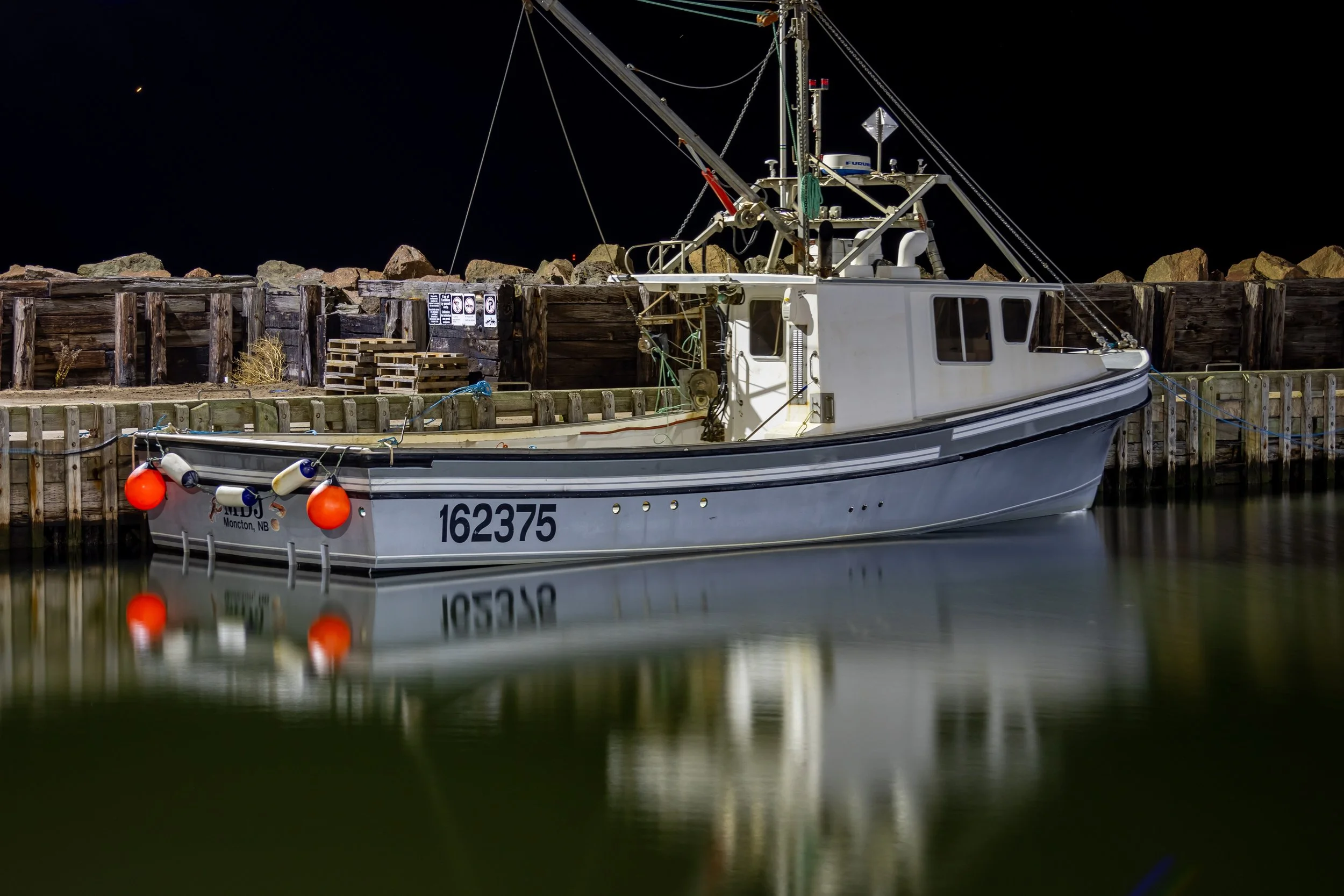
Image taken at the Caissie Cape Wharf (New Brunswick, Canada) during a calm night. Camera settings were: f7.1, 15 seconds at ISO100.
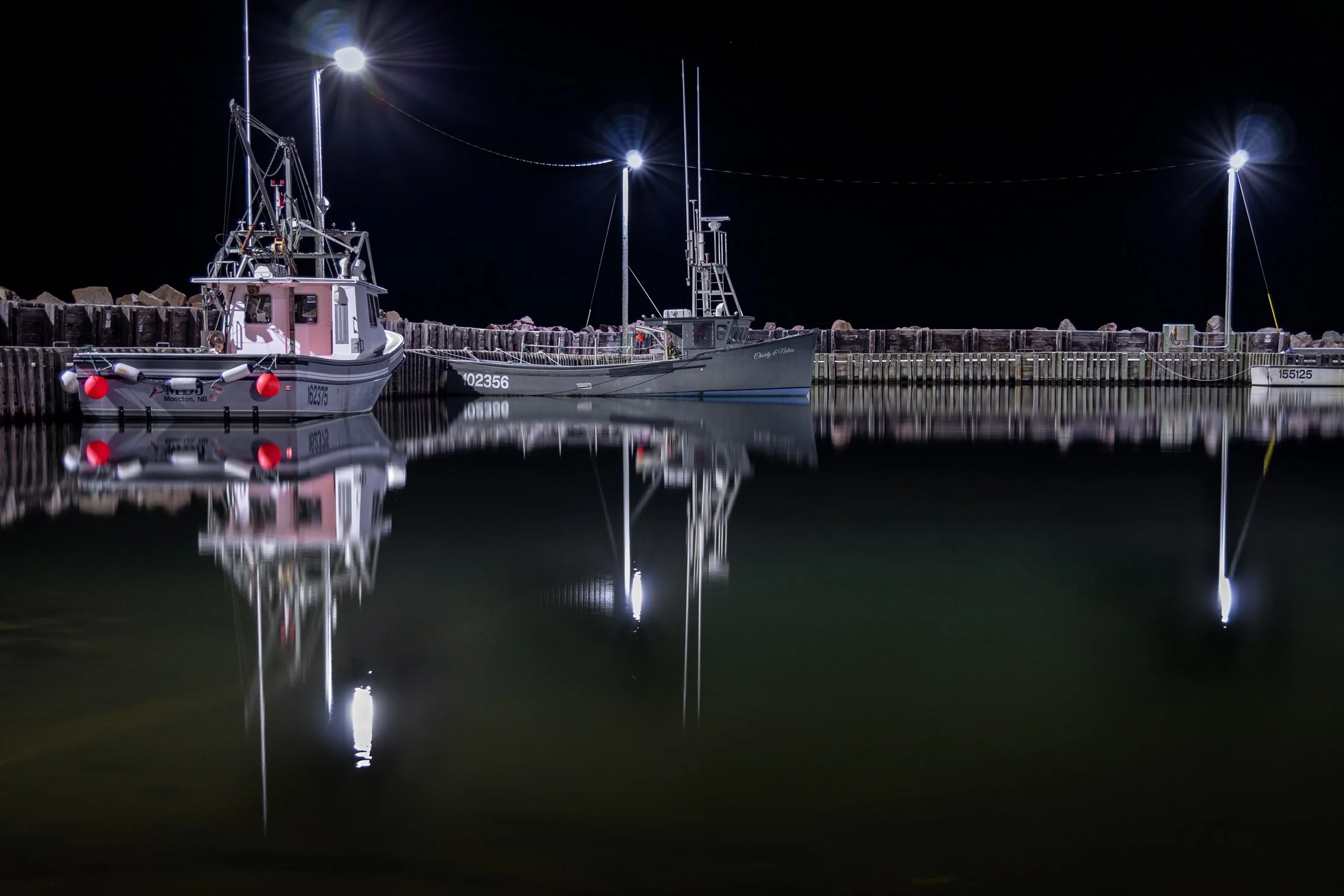
Image taken at the Caissie Cape Wharf (New Brunswick, Canada) during a calm night. Camera settings were: f5.6, 6 seconds at ISO100.
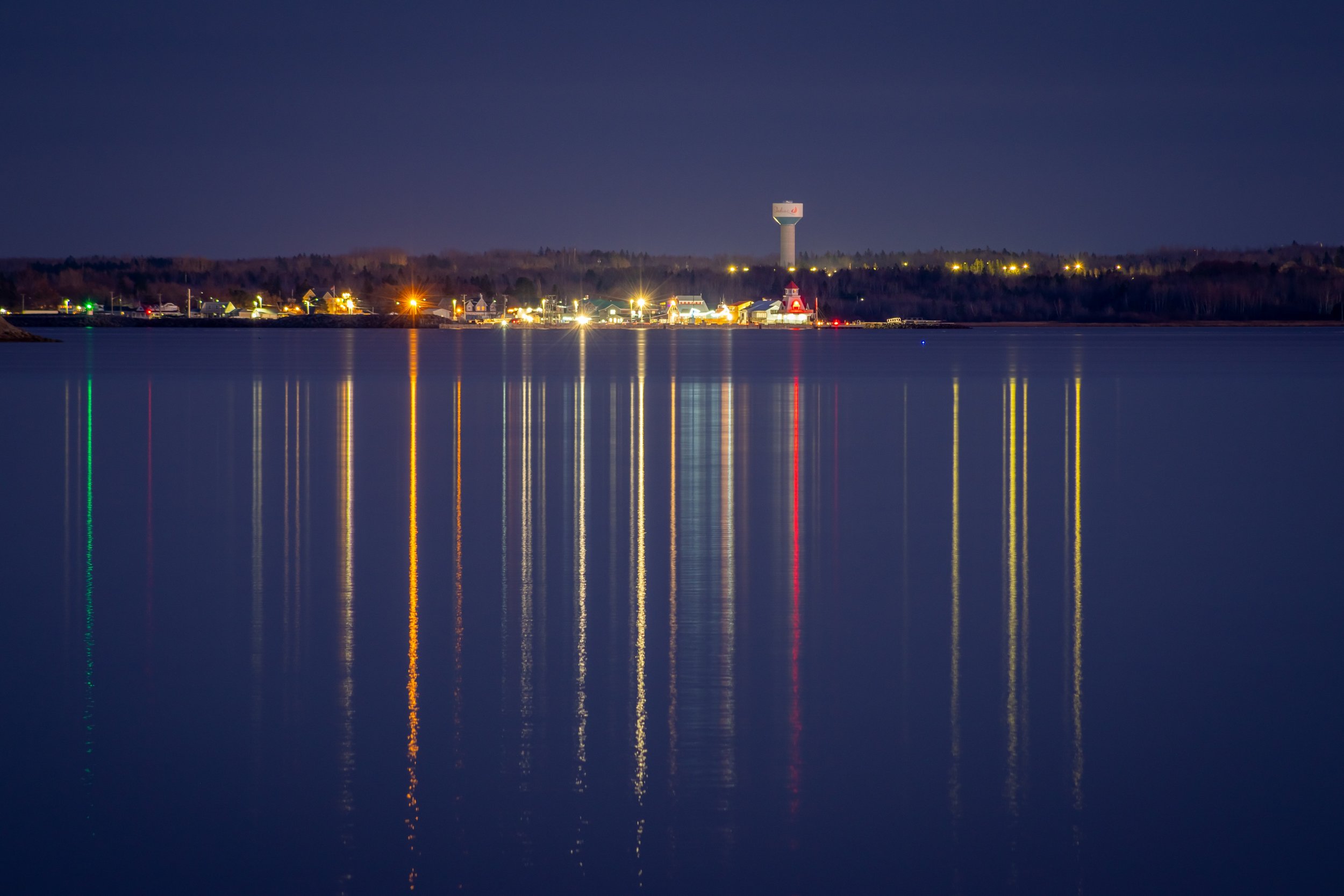
Image of the Bay of Shediac overlooking Shediac (New Brunswick, Canada). Camera setting were: f8, 25 seconds at ISO100.
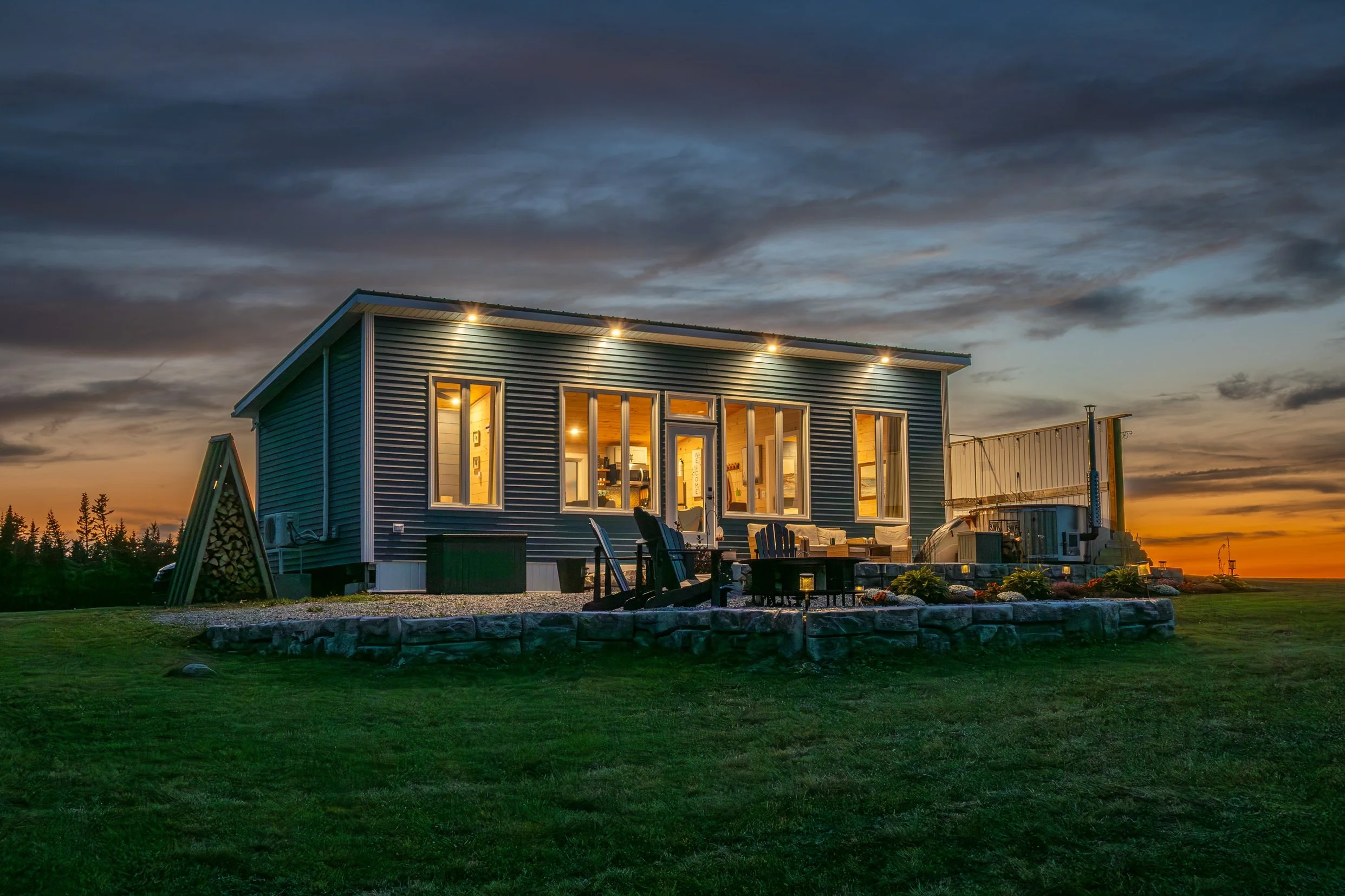
Image taken at Gardner Creek (New Brunswick, Canada) just after sunset. Camera setting were: f8, 0.8 second at ISO100.